Amphora
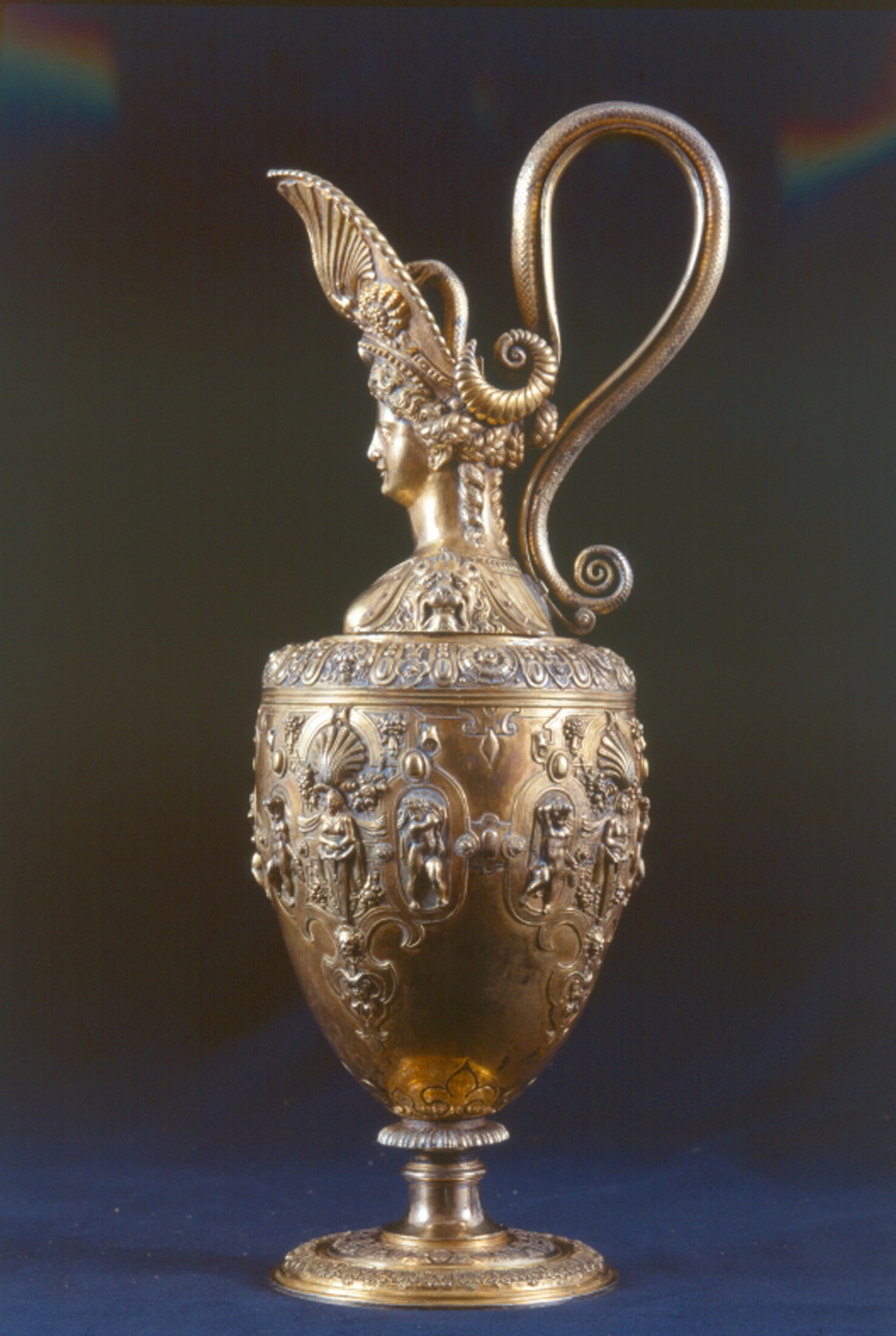
Characterised by a circular foot and an ovoid body, finely covered with representations in relief, the jug features the bust of Diana on the shoulder, as indicated by the crescent on the forehead; the spout is instead created by the sinuous modeling of the tiara of the goddess on which it rests
the handle of the vase, crossed by a snake.
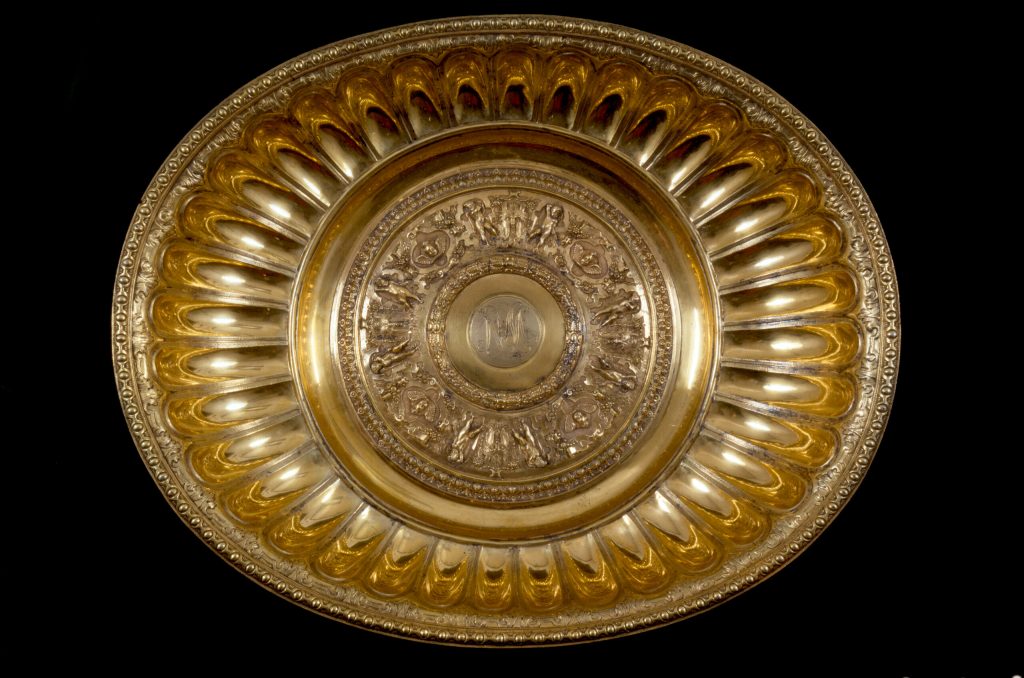
The presence of the “N” and “W” stamp with a lion’s head leads back to the workshop of Wenzel I Jamnitzer, originally from Vienna but active in Nuremberg. The presence of this work together with the basin (inv MD 2001.083.010) in Santa Maria presso San Celso in Milan (from which they were deposited in the Diocesan Museum in 2001) has been attested since 1796: German goldsmiths circulated frequently in Milan during the second half of the sixteenth century. Stylistically, both works can be dated back to around 1570, in the midst of the mannerist climate.
Audio
Artwork details
- Artist:
- Wenzel I Jamnitzer (Vienna 1508 - Norimberga 1585)
- Title:
- Amphora
- Date:
- c. 1570
- Medium and technique:
- Cast silver, chased and gilded
- Dimensions:
- 36 × 13 cm
- Inventory:
- MD 2001.083.009
- Location
-
Location: Works from the Diocese, hypogeum
The core of the Museum’s collection consists of works from numerous churches across the vast territory of the Archdiocese of Milan, an area of great cultural and artistic richness. Before the Museum opened in 2001, surveys and site visits throughout the diocese uncovered treasures that had, in some cases, previously been unknown, and initiated a programme to recover, restore and promote this artistic heritage. The selected works included panel and canvas paintings, wooden and marble sculptures, and liturgical furnishings. These were not objects of local devotion and mostly had conservation problems, and were therefore restored, or were at risk of theft. The works are arranged chronologically, beginning on the ground floor and continuing along the central corridor on the first floor; some are displayed in the hypogeum. This core is complemented by other works that have entered the Diocesan Museum’s permanent collection over the years through loans, donations and bequests.
Related artworks