The Arch of Titus and the Roman Forum
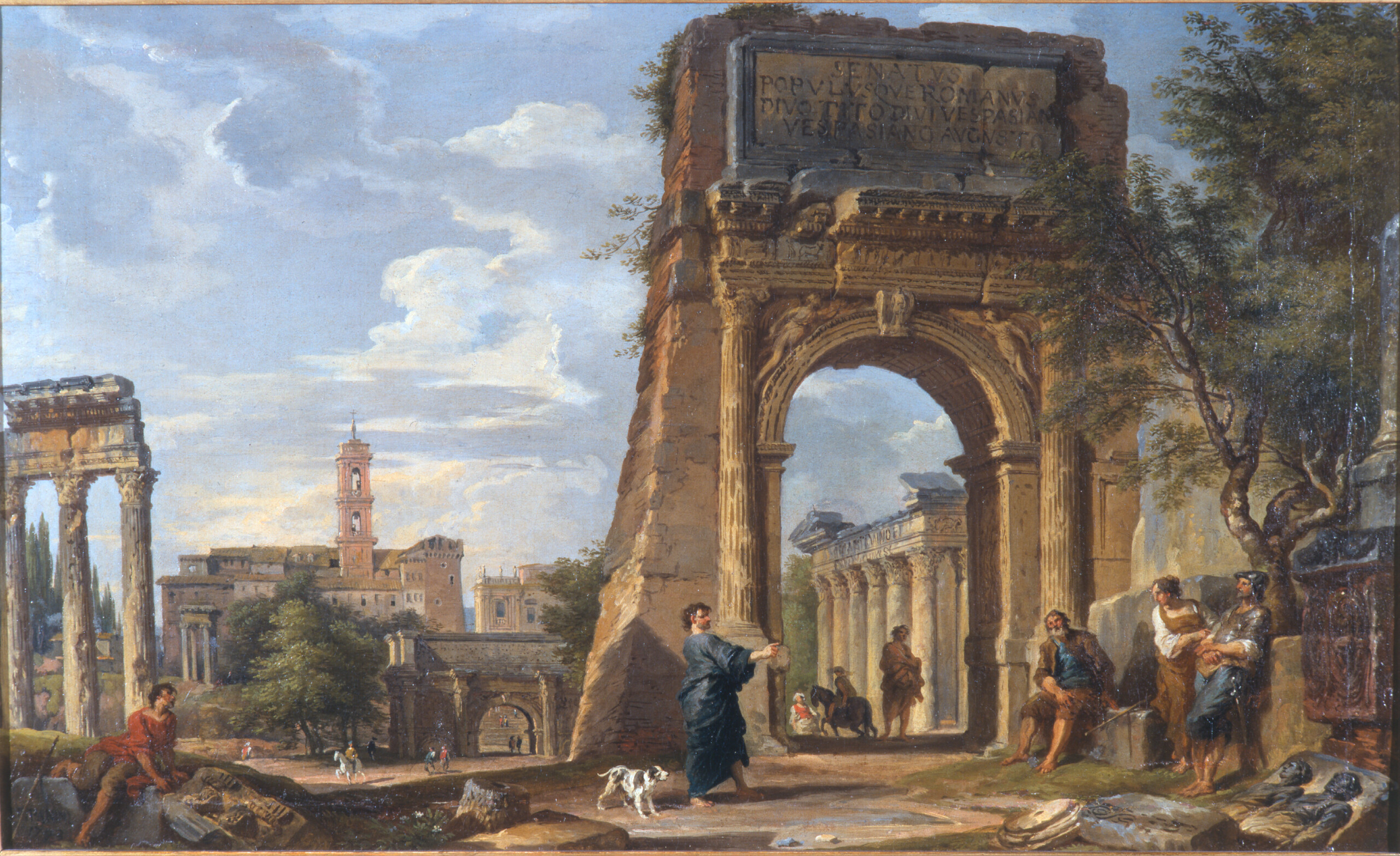
The painting, coming from the Archiepiscopal Gallery and part of the collection of Cardinal Giuseppe Pozzobonelli (1696-1783), is one of the four referred to the great landscape painter of Piacenza origin from the ancient inventories of the collection, together with the musical contest between Apollo and Marsyas, judge King Midas (inv. MD 2001.025.007), and Apollo flays Marsyas in the presence of King Midas (inv. MD 2001.025.016) and to A Sibyl, the pyramid of Gaius Cestius and the Borghese Vase (inv. MD 2001.025.008).
The work is an example of the production of “whims” characteristic of the painter, in which the monuments, freely assembled together, prevail over the figures, which are smaller in size and rendered with a casual style. In this case you can recognize the Arch of Titus, the columns of the temple of the Dioscuri in the foreground, the arch of Septimius Severus and the temple of the diva Faustina in the background, while the Aracoeli on the Capitoline Hill closes the scene in the background. The airy composition, the liveliness of the chromatic range and the elegance of the pictorial ductus lead us to date the work within the fifth decade of the eighteenth century, corresponding to the Roman stay of Cardinal Pozzobonelli.
Audio
Artwork details
- Artist:
- Giovanni Paolo Panini (Piacenza 1691 - Roma 1765)
- Title:
- The Arch of Titus and the Roman Forum
- Date:
- c. 1755-1765
- Medium and technique:
- oil on canvas
- Dimensions:
- 38,7 × 63,2 cm
- Inventory:
- MD 2001.025.021
- Location
-
Location: Pozzobonelli Collection, first floor
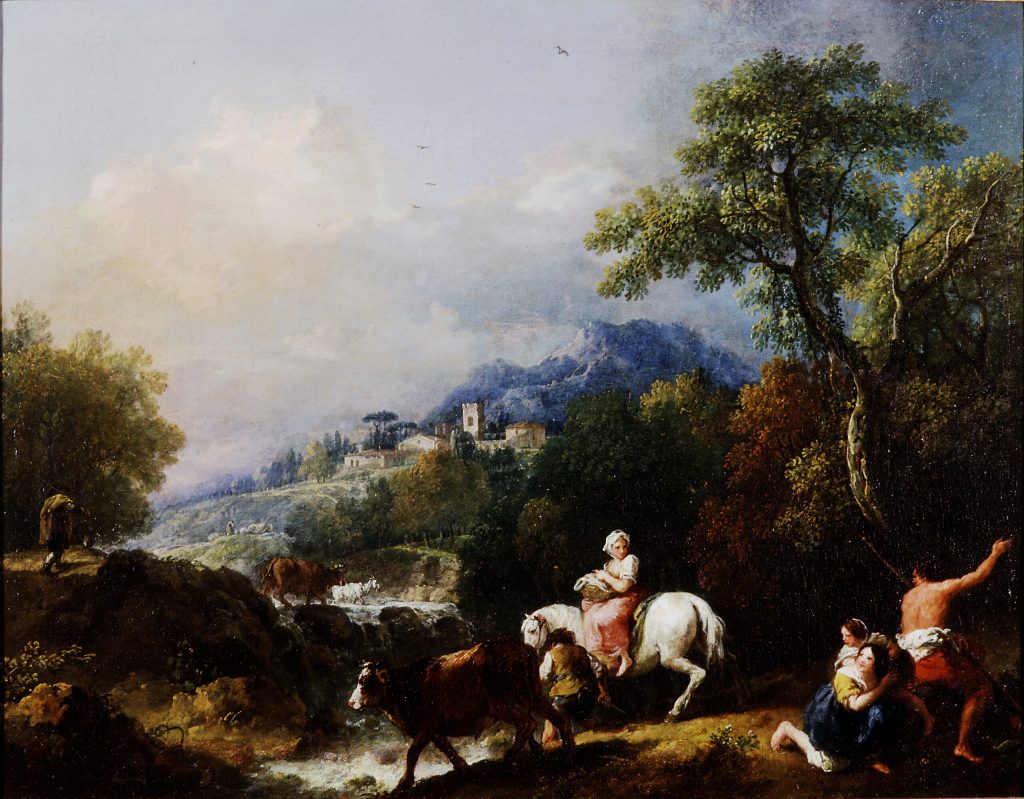
The Pozzobonelli Collection comprises a group of works that came to the Diocesan Museum from the Archbishop’s Picture Gallery and reflect the distinctive collecting interests of Cardinal Giuseppe Pozzobonelli (1696–1783). The paintings form one of the most significant expressions of the Arcadian culture that spread through Milan in the eighteenth century. Mostly small in size, they depict Arcadian subjects, pastoral landscapes and seascapes, and architectural views with figures. They are attributed to artists from Roman, Venetian and Lombard circles and, to a lesser extent, Tuscan, Neapolitan and Flemish circles, active between the late seventeenth century and the 1770s. Among the painters represented in the collection are Francesco Zuccarelli, Vittorio Amedeo Cignaroli, the Cavalier Tempesta, Paolo Anesi and Giovanni Paolo Panini.
Related artworks