Exhibition
For the first time since its birth in 2001, the Museo Diocesano’s Masterpiece for Milan will be a work created by a female artist: Artemisia Gentileschi.
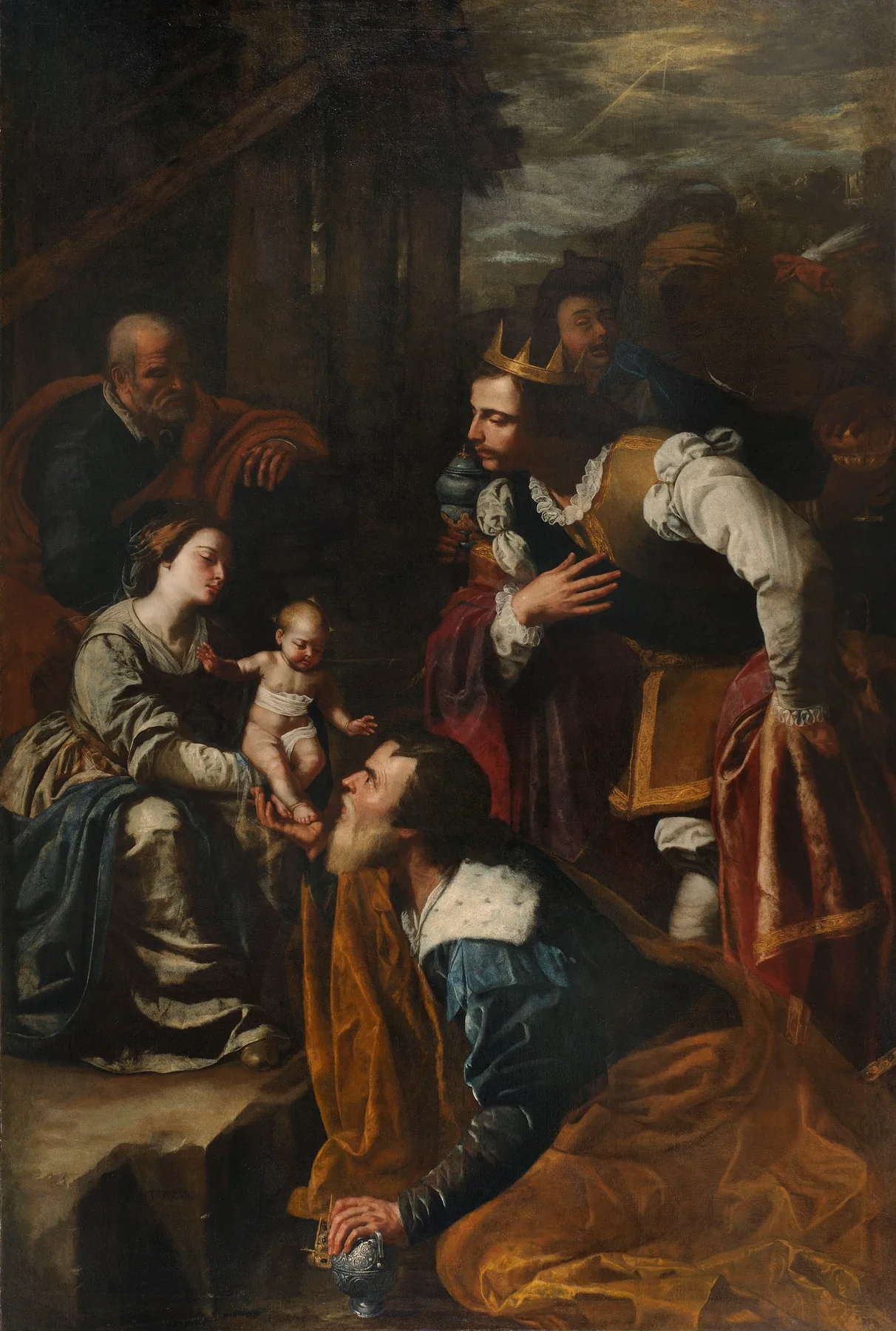
And her Adoration of the Magi, one of the most significant paintings of Artemisia’s career, is also at its Milanese premiere. Exceptionally loaned by the Diocese of Pozzuoli (NA), the canvas of impressive dimensions (310×206 cm) is part of a decorative cycle created for the cathedral of Pozzuoli between 1636 and 1637, and will be exhibited from 29 October 2019 to 26 January 2020 at the Museo Diocesano Carlo Maria Martini.
The painting, created in the Neapolitan period of Artemisia Gentileschi, is part of a cycle commissioned by the Spanish bishop of Pozzuoli Martìn de Lèon y Cardenas after 1631, the year of the eruption of Vesuvius which spared the Pozzuoli city; Artemisia was entrusted with three canvases (in addition to the Adoration of the Magi, the Saints Proculus and Nicaea, and San Gennaro in the amphitheatre) which she painted between 1635 and 1637, the year of her departure for England. Artemisia’s paintings are added to the eight other canvases of the cycle, painted by Massimo Stanzione, Giovanni Lanfranco, Cesare Fracanzano and other Neapolitan artists.
Soon after arriving in Naples, Artemisia was commissioned to paint two works: the Annunciation, now at Capodimonte, and the altarpiece The Adoration of the Magi.
Alongside being her first major public commission, the latter marked the highest recognition of her career.
In this painting, Artemisia reinterprets Caravaggio’s example through her new contacts with Neapolitan artists. Her preference for a restrained palette of browns, reds, blues and yellows is combined with extraordinary attention to the reality of objects, evident in the splendid silver vessel carried by the kneeling king, and a careful, theatrical rendering of light and shadow.
The Virgin is depicted with great dignity as she gently presents the child for the Magi’s veneration. Saint Joseph watches from the background, as is customary in depictions of this Gospel episode.
The composition is dominated by the imposing figures of the Magi in the foreground, richly and fashionably dressed in cloaks of precious fabrics. The solemnity of the Epiphany and their gestures of reverence coexist with an atmosphere of affectionate intimacy created by a skillful interplay of glances.
Pozzuoli Cathedral was extensively damaged by fire in 1964, causing deterioration to several paintings in the cycle. In Artemisia’s Adoration of the Magi, the upper portion was irreparably damaged, particularly the face of the dark-skinned king, which now appears to merge into the canvas’s brown ground.
A Silvana Editoriale catalog accompanies the exhibition.