Exhibition
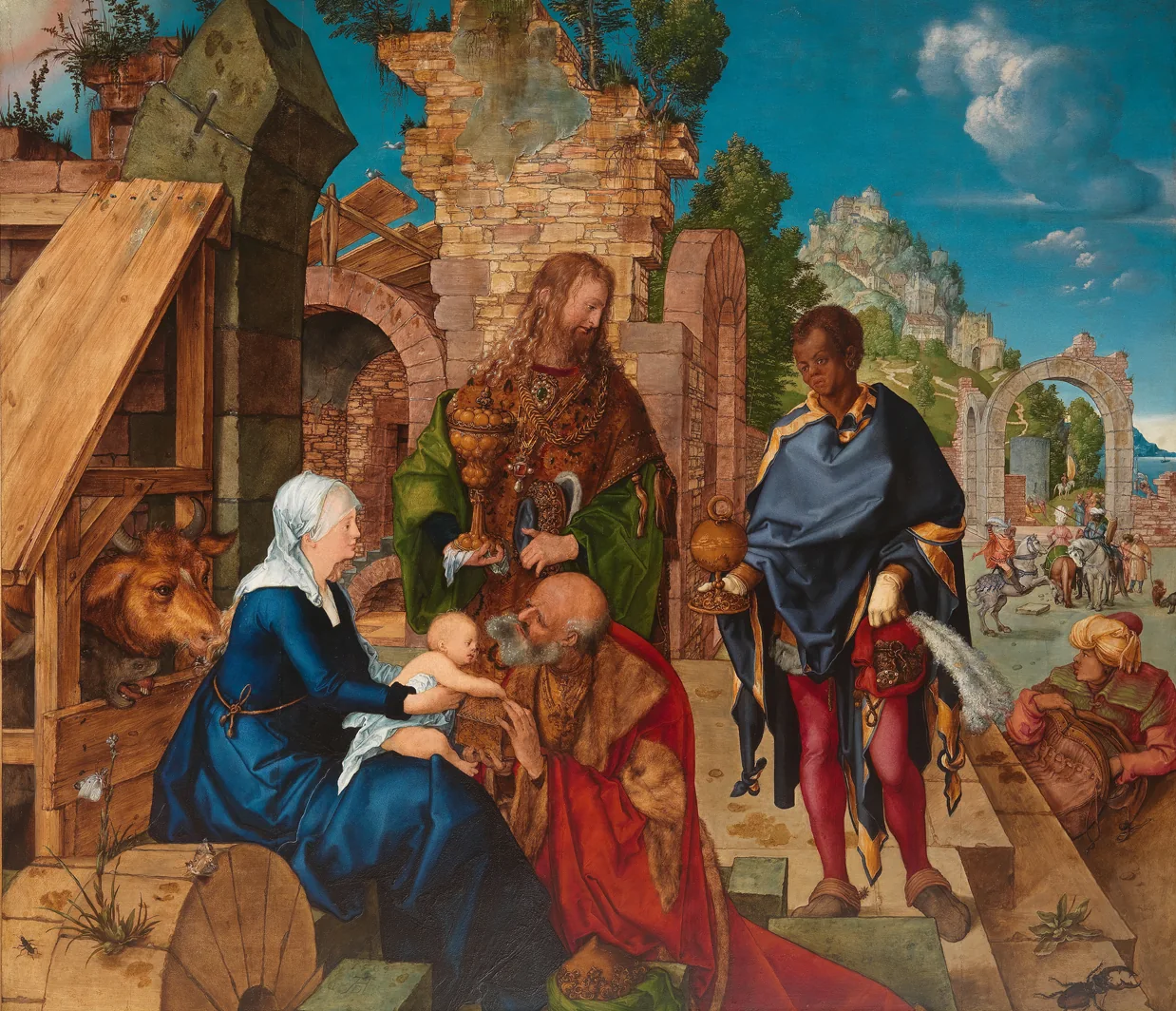
Albrecht Dürer, an extraordinary protagonist of the German and European Renaissance, performed the Adoration of the Magi in 1504, on the threshold of his second journey to Italy. By now a mature and established artist, around 1505 he felt the need to update himself on the latest innovations proposed by the Italian Renaissance.
The Adoration takes up a traditional iconographic scheme: the Virgin shows the child to the three magi, depicted as men of different ethnic groups and three different ages. The German master interprets the scene with imagination and refinement, showing great originality both in the expressive rendering and attitudes of the characters and in the definition of the clothes, objects and background. All his knowledge, his inexhaustible curiosity, his desire to keep up to date on the innovations of the Italian Renaissance that he had already had the opportunity to see directly during his Italian stay in the 1490s come together in this work.
The artist portrays himself in the figure of the King in the center, with a beard and long hair, with sumptuously decorated clothes. In fact, his physiognomy is recognisable, already known thanks to the beautiful Self-portrait with gloves preserved in the Prado Museum in Madrid or the Self-portrait with fur coat in the Alte Pinakothek in Munich. The exhibition, which marks the return of the “A masterpiece for Milan” initiative, is completed with a visit to the chapel of the Magi in the basilica of Sant’Eustorgio, where the reliquary of the Magi is exceptionally displayed.
The relics, donated to Sant’Eustorgio himself by the emperor of Constantinople, were stolen by Federico Barbarossa’s men and then, in part, returned at the beginning of the twentieth century, remaining over the centuries the object of uninterrupted devotion by the Milanese.