Christ Crucified
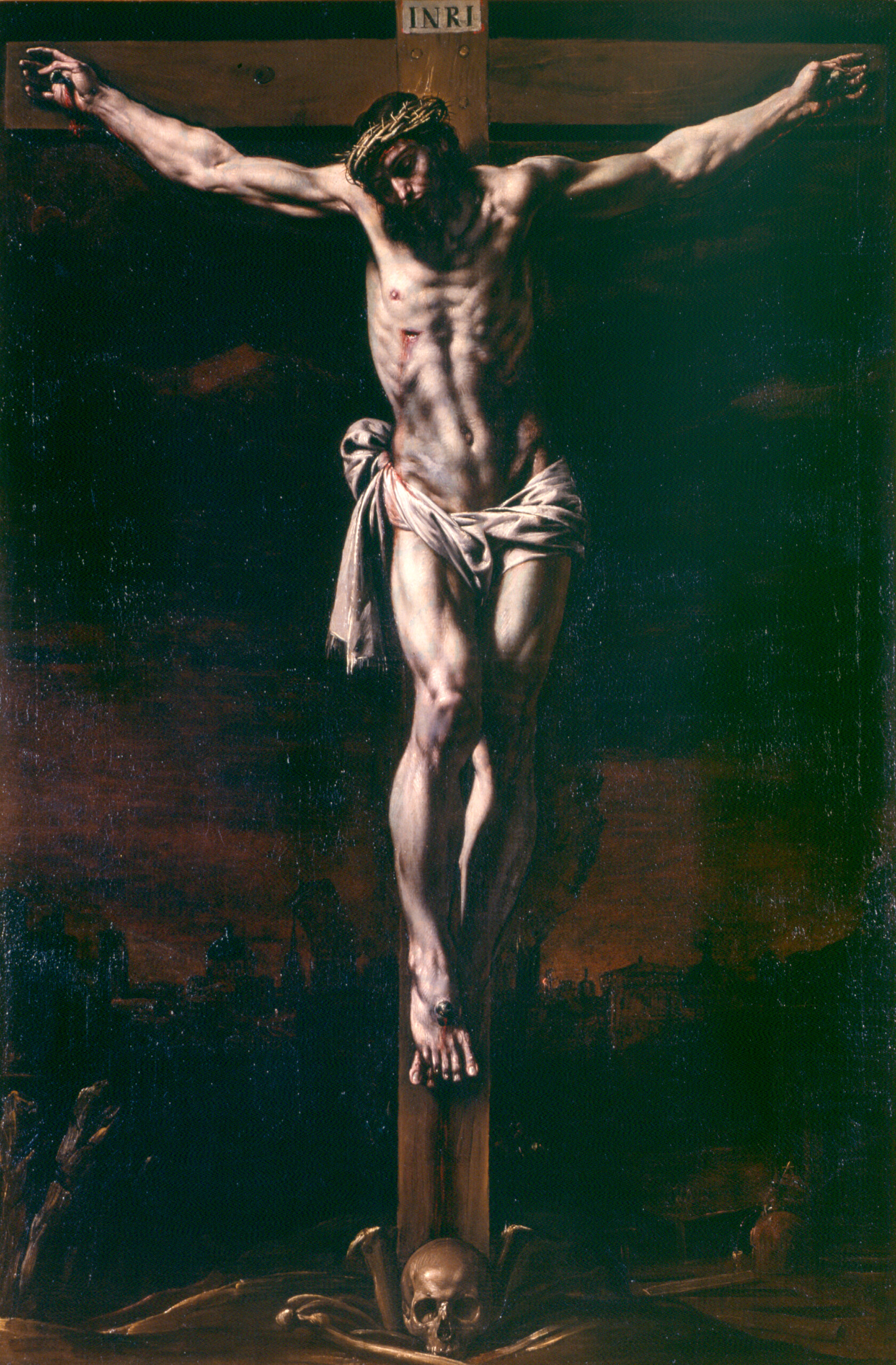
The painting, coming from the church of the Holy Apostles Peter and Paul in Gerenzano (VA), is dominated by the extraordinary plastic strength of the figure of Christ who emerges from the dark background of a gloomy scenario, only sketched almost in monochrome. In the background, a fire and a city appear, perhaps Rome; while on the ground, on the right, the mystical lamb is depicted with the banner of the Resurrection, a Eucharistic symbol.
Dating to around 1630, the painting presents the characteristic features of the last phase of Tanzio da Varallo’s production, marked by the horrors of the plague of 1630 and the recovery of the dramatic tones of Caravaggism in the violent contrasts of light and shadow, in the bare essentiality of the composition, in the choice of cold and dark tones.
Audio
Artwork details
- Artist:
- Antonio d’Errico, detto Tanzio da Varallo (Alagna Valsesia (VC) 1575 ca – Varallo (VC) 1633)
- Title:
- Christ Crucified
- Date:
- c. 1630
- Medium and technique:
- oil on canvas
- Dimensions:
- 174,5 × 115,5 cm
- Inventory:
- MD 2009.135.001
- Location
-
Location: Works from the Diocese, first floor
The core of the Museum’s collection consists of works from numerous churches across the vast territory of the Archdiocese of Milan, an area of great cultural and artistic richness. Before the Museum opened in 2001, surveys and site visits throughout the diocese uncovered treasures that had, in some cases, previously been unknown, and initiated a programme to recover, restore and promote this artistic heritage. The selected works included panel and canvas paintings, wooden and marble sculptures, and liturgical furnishings. These were not objects of local devotion and mostly had conservation problems, and were therefore restored, or were at risk of theft. The works are arranged chronologically, beginning on the ground floor and continuing along the central corridor on the first floor; some are displayed in the hypogeum. This core is complemented by other works that have entered the Diocesan Museum’s permanent collection over the years through loans, donations and bequests.
Related artworks