The Sacrilegious Theft
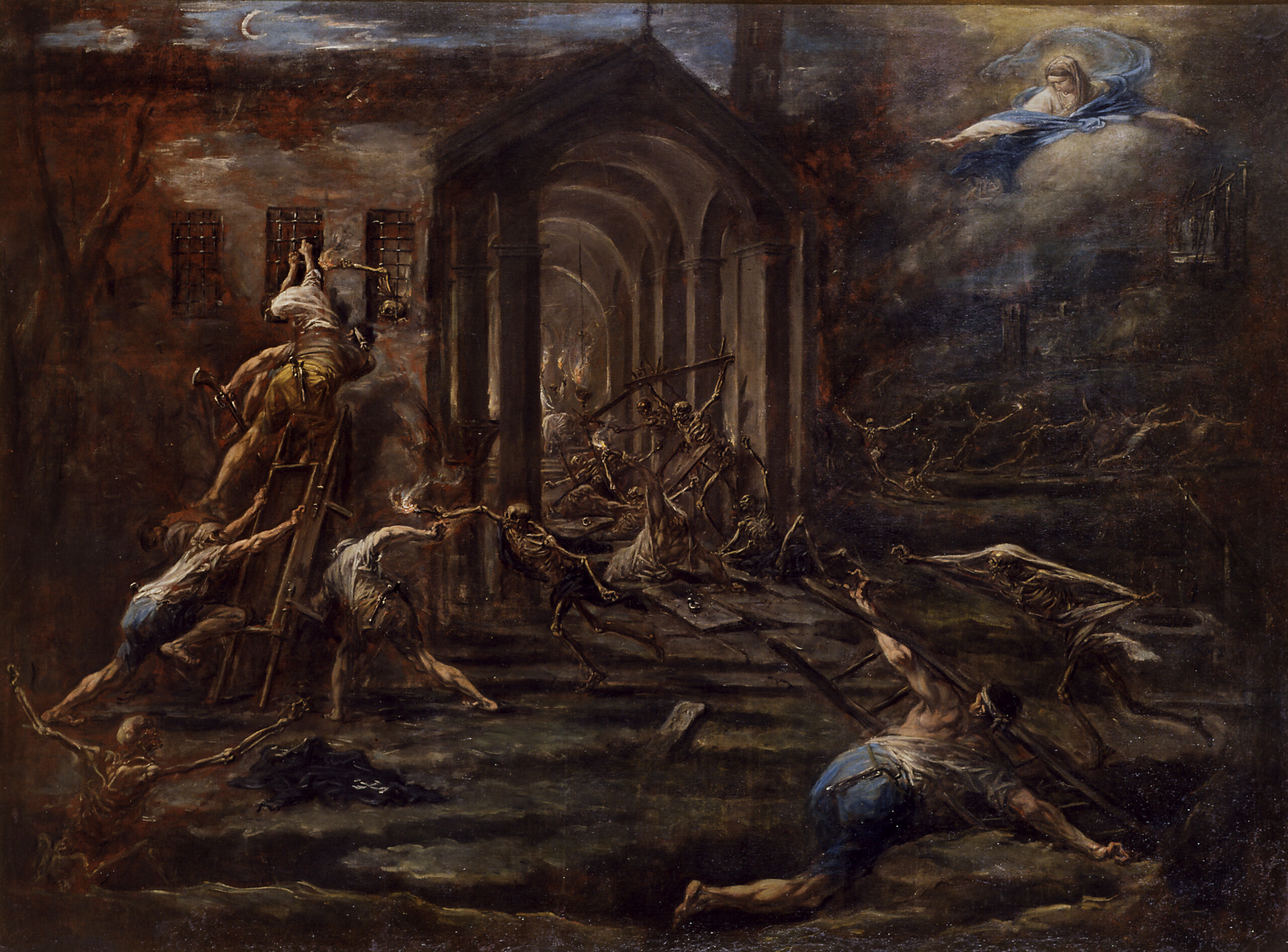
A masterpiece by the Genoese painter who was also active in Milan, the work represents the sacrilegious theft attempt which occurred in 1731 in the church of Santa Maria Assunta di Campomorto, in Siziano (PV), where it originally comes from. The scenographic setting transforms a painting referring to a news story into a scene of great power and suggestion, which brings together two successive narrative moments: on the left the thieves put to flight by the dead who suddenly returned to life and, at the top right, the hanging of the guilty, as indicated by the figure of the Virgin, owner and protector of the church. The visionary scope of the painting is given by the elongated and darting figures of the characters, masterfully resolved with quick brush strokes and white lead highlights. The work came to the Diocesan Museum from the Archbishop’s Picture Gallery.
Audio
Artwork details
- Artist:
- Alessandro Magnasco (Genova 1667-1749)
- Title:
- The Sacrilegious Theft
- Date:
- 1731
- Medium and technique:
- oil on canvas
- Dimensions:
- 177 × 236,5 cm
- Inventory:
- MD 2001.060.001
- Location
-
Location: Works from the Diocese, first floor
The core of the Museum’s collection consists of works from numerous churches across the vast territory of the Archdiocese of Milan, an area of great cultural and artistic richness. Before the Museum opened in 2001, surveys and site visits throughout the diocese uncovered treasures that had, in some cases, previously been unknown, and initiated a programme to recover, restore and promote this artistic heritage. The selected works included panel and canvas paintings, wooden and marble sculptures, and liturgical furnishings. These were not objects of local devotion and mostly had conservation problems, and were therefore restored, or were at risk of theft. The works are arranged chronologically, beginning on the ground floor and continuing along the central corridor on the first floor; some are displayed in the hypogeum. This core is complemented by other works that have entered the Diocesan Museum’s permanent collection over the years through loans, donations and bequests.
Related artworks